

 ไทย
ไทย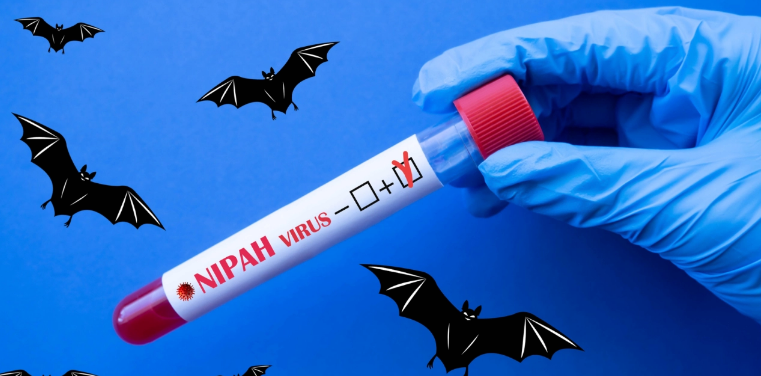
On January 26, 2026, at a press conference held by the Ministry of Public Health on the topic of ” Nipah Virus Disease, ” Dr. Sophon Iamsirithavorn, Deputy Permanent Secretary of the Ministry of Public Health, stated that “Nipah virus” remains classified as one of the 13 dangerous communicable diseases under the Communicable Diseases Act B.E. 2558 (2015). Currently, its status in Thailand remains unchanged, and there have been no reported cases of this disease in Thailand.
Currently, the situation of concern is occurring abroad, particularly in Bangladesh and West Bengal , India . Although these areas are far from Thailand, vigilance is necessary because of direct flights arriving at Suvarnabhumi, Don Mueang, and Phuket airports. The Department of Disease Control began screening travelers on limited flights directly from affected areas last weekend. If a traveler exhibits symptoms suggestive of the disease, such as fever or respiratory symptoms, and has a history of travel from an affected area within the past 21 days, a contact tracing process will be conducted, and samples will be collected for testing immediately. To date, some patients have been tested, but the results have not yet shown positive for the Nipah virus. Furthermore, passengers from high-risk areas must complete documents as required by the Communicable Diseases Act, and if they develop any symptoms within 21 days of their stay in Thailand, they must contact the 1422 hotline immediately.
-
There are no signs indicating an ongoing outbreak.
Dr. Sophon further stated that Thailand is fully prepared to handle the situation and there are currently no Nipah virus patients in Thailand. However, the situation abroad must be monitored. The latest situation shows that the outbreak is still at a level where the affected areas can control the spread. There are no signs of continued community transmission or cross-border outbreaks in nearby countries.
Although Thailand is far away, there are direct flights available, so it is necessary to upgrade the safety measures for travelers to match the situation. A risk assessment will be conducted again within one week.
Nipah virus has also been detected in bats in Thailand , but the viral load in bats is lower than in countries with periodic outbreaks. Thailand maintains continuous surveillance but has not yet encountered any problems. Animal health agencies are also using this system to manage the situation, for example, by not raising pigs in areas where the virus has been found in bats and by implementing safety measures in pig farming to ensure that the virus is not transmitted from bats to pigs or to humans.
“In Thailand, there are still no signs of any outbreaks, and retrospective tests on patients with encephalitis have not revealed any evidence of Nipah virus infection. The Nipah virus found in bats in Thailand is the Bangladeshi strain. As for assessing the likelihood of an outbreak, I think it would be at a mild yellow level,” said Dr. Sophon.
-
Upgrade 4 measure
Dr. Jurai Wongswasdi, a senior medical expert and spokesperson for the Department of Disease Control, stated that four main measures have been implemented to enhance preparedness for the Nipah virus.
1. Strengthen the surveillance system by maintaining and upgrading screening of travelers from high-risk areas, particularly those receiving cross-border transmissions from India and Bangladesh, including Nipah virus testing before entry into the country.
Travelers from West Bengal must complete the Health Status Form (Form 8) as per the Communicable Diseases Act, undergo screening at major entry points (Suvarnabhumi, Don Mueang, and Phuket airports) including temperature checks and symptom assessment. Suspected cases will be isolated and referred to designated government hospitals. High-risk contacts will be quarantined in government quarantine facilities, and traveler guidance from high-risk areas will be communicated through media, interpreters, and electronic channels.
Healthcare facilities are increasing the sensitivity of surveillance, clarifying guidelines to cover treatment, disease investigation, and alerting doctors, especially those with a history of travel or high-risk exposure. Communities are also strengthening their early warning systems, notifying village health volunteers (VHVs) and community health assistants (CHAs) to report unusual incidents in their areas.
2. Prepare to receive patients: Upgrade laboratory readiness for testing and establish central guidelines by the Department of Medical Sciences; hospitals prepare isolation rooms for infection control and personal protective equipment; prevent hospital-acquired infections by isolating suspected patients using PPE according to risk level; and establish a safe system for transferring and collecting specimens.
3. Proactively communicate risks: Inform the public about disease prevention guidelines, provide ongoing advice to travelers to and from India, and coordinate with the tourism sector and private hospitals to enhance surveillance and build confidence.
4. Integrate collaborative efforts under the One Health model, coordinating with the Department of National Parks, Wildlife and Plant Conservation, the Department of Livestock Development, and academic institutions to monitor fruit bats/pet bats and prepare response plans when suspected cases are found.
-
Less than 1% infectious
“Infection requires contact with bodily fluids, so close contact with the patient is necessary, such as with family members or healthcare workers caring for them. The transmissibility of the Nipah virus is less than 1, compared to COVID-19’s current rate of 8. This means that one person infected with the Nipah virus can transmit it to less than one other person; the chance of spreading it further is very low.”
Furthermore, infected individuals often experience severe symptoms, making travel unlikely. However, this virus is mutating, so we are awaiting information from the World Health Organization ( WHO ) regarding any potential strain changes. It is concerning that some infected individuals develop severe symptoms, and there is currently no cure or vaccine.
Long-term surveillance data shows that Nipah virus has been detected in fruit bats in Thailand, but only about 10%, compared to the 40-50% found in bats in endemic areas of India. Importantly, previous research in Thailand has not found evidence of transmission from bats to pigs or to humans in areas near infected bats. The peak period for virus detection in bats is typically April-May.
-
Guidelines for public conduct.
1.) Regarding food safety, never eat fallen fruit or fruit that has been bitten by animals, as it may be contaminated with bat saliva. Always wash and peel fruit thoroughly before eating.
2.) Pet care: Pigs should not be raised under trees that serve as shelters for bats, to prevent their secretions from falling into the enclosure.
3.) Do not feed pigs bitten fruit scraps.
4.) If members of the public find their pets to be unusually sick or dead, they should immediately notify the livestock department.
5.) Do not hunt or touch bats with bare hands.
6.) If you experience high fever, headache, or confusion, seek medical attention immediately and clearly inform them of your exposure history.