

 ไทย
ไทย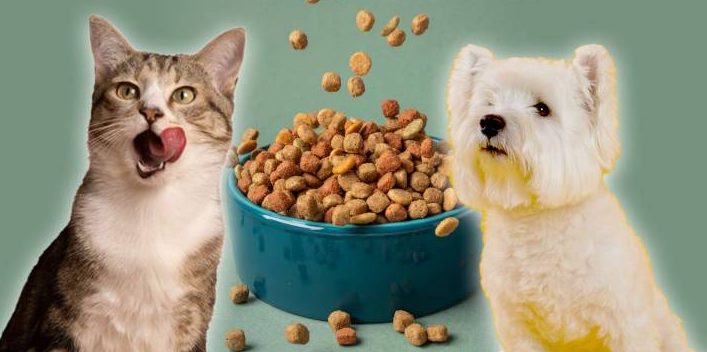
The Office of Consumer Protection Board (OCPB) revealed that Thailand is the world’s second-largest exporter of dog and cat food, expanding its market reach further due to its strong reputation and positive image in the quality and standards of its food products, including pet food. In 2024, Thailand’s dog and cat food exports reached a value of US$2,677.03 million, a 29% increase.
Mr. Poonpong Naiyanapakorn, Director of the Office of Trade Policy and Strategy, revealed that the global and Thai trade situation for dog and cat food (Customs Code 230910) shows that in 2024, Thailand was the world’s second-largest exporter of dog and cat food, valued at US$2,677.03 million, a 29% increase compared to the previous year. This figure represents 10% of global dog and cat food exports, trailing Germany, which has held the top spot for several years, with exports valued at US$3,282.69 million (12.3% of total global exports).
Over the past year, the global dog and cat food market has been extremely vibrant. In 2024, the total global import value reached US$26,466.28 million. The top five importing countries were Germany, with an import value of US$2,435.16 million (9.2 percent of the total global import value), followed by the United States (import value of US$2,215.51 million, 8.4 percent), the United Kingdom (import value of US$1,762.27 million, 6.7 percent), Poland (import value of US$1,530.44 million, 5.8 percent), and Canada (import value of US$1,379.63 million, 5.2 percent).
Thailand’s competitiveness in dog and cat food products is currently considered stable and has the opportunity for continuous growth in various markets, as Thailand has strengths and a good image in terms of food product quality and standards, including pet food. Exports of Thai dog and cat food products in 2024 were valued at US$2,677.03 million, a 29 percent increase compared to the previous year, with good growth in key markets where Thailand has a high export share, such as:
- The United States (32.4 percent of the total value of Thai exports) exports to the United States were valued at US$868.40 million, a 47 percent increase. The next most important markets were Japan (export value of US$329.37 million, a 12.3 percent increase, 0 percent increase) and Australia (export value of US$167.21 million, a 6.2 percent increase, 45 percent increase)
- Italy (export value 164.94 million US dollars, 6.2 percent share, 34 percent growth) and Malaysia (export value 138.18 million US dollars, 5.2 percent share, 8 percent growth). The export of dog and cat food from Thailand to the top 5 markets has a combined share of 62.3 percent of the value of dog and cat food exports from Thailand to the world.
For the European Union (EU) market,
Thai exports in 2024 compared to 2023 expanded by 47 percent, reaching a value of US$349.58 million. Key markets in this region include Italy (export value of US$164.94 million, a 34 percent increase), Germany (export value of US$105.24 million, a 71 percent increase), Belgium (export value of US$35.51 million, a 92 percent increase), France (export value of US$19.11 million, a 16 percent increase), and the Netherlands (export value of US$10.30 million, a 20 percent increase).
In the Asian market,
including the ASEAN market, there is continued growth, including Malaysia (export value of US$138.18 million, an 8 percent increase), the Philippines (export value of US$111.25 million, an 13 percent increase), Indonesia (export value of US$66.49 million, an 9 percent increase), Vietnam (export value of US$28.27 million, an 3 percent increase), and Singapore (export value of US$21.41 million, an 15 percent increase).
While in East Asian markets
such as Taiwan (export value 95.89 million US dollars, an increase of 18 percent), China (export value 44.30 million US dollars, an increase of 18 percent) and South Korea (export value 37.60 million US dollars, an increase of 18 percent), although the proportion of Thai products going to this market is not yet high, Thai dog and cat food exports have expanded well. For the South Asian market, India (export value 79.31 million US dollars, an increase of 26 percent) is an important export market.
The Middle East market
is a new market to which Thailand has yet to export much, but it has significant potential and is worth keeping an eye on, such as the United Arab Emirates (export value of US$31.93 million, a 64 percent increase), Saudi Arabia (export value of US$17.92 million, a 65 percent increase), Kuwait (export value of US$5.66 million, a 117 percent increase), Israel (export value of US$5.41 million, a 62 percent increase), and Turkey (export value of US$3.75 million, a 68 percent increase). This includes Eastern European countries such as Poland (export value of 1.50 million US dollars, an increase of 108 percent), Lithuania (export value of 1.11 million US dollars, an increase of 170 percent), the Czech Republic (export value of 0.42 million US dollars, an increase of 99 percent), and Romania (export value of 0.37 million US dollars, an increase of 395 percent).
Key factors that give Thailand the opportunity to expand its market in various regions include the increasing popularity of pet keeping worldwide, changes in population structure, including the increasing number of elderly people and societies with smaller family sizes. Elderly people who live alone tend to keep pets as companions, and the younger generation who have children later or do not marry are also increasingly interested in keeping pets.
Furthermore, consumer behavior in many countries is increasingly interested in imported products due to the trend toward pet health. Therefore, buyers are increasingly interested in premium international products, including nutritious pet food. This demand for these products is particularly strong. Thai entrepreneurs developing multifunctional food products, such as healthy pet food with high vitamin content for young pets, sick pets, or senior pets, with a variety of formulas and high-quality ingredients, will be able to effectively meet this consumer trend.
Mr. Poonpong stated that in addition to the growing demand for functional and premium food products, there is also a growing need to prioritize environmentally friendly products, such as using environmentally friendly packaging. If Thai exporters can produce products that meet these trends, they will have the opportunity to expand exports to key markets such as Europe and the United States, as well as to Asian markets such as Japan and China, and to emerging markets in the Middle East and Eastern Europe.
For exports during the first seven months of 2025, Thailand exported dog and cat food worth US$1,685.74 million, a 10.72 percent increase compared to the same period the previous year. The United States remains Thailand’s top export market, with exports to the US valued at US$609.86 million, a 26 percent increase. This growth continues despite the US’s 19 percent reciprocal tariff, which Thailand still has opportunities to compete on price.
However, there are still issues regarding the accumulation of local content regulations that need to be monitored in order to prepare for potential changes in Thailand’s export structure. Entrepreneurs should prioritize product quality development, establish standards, and enhance the image of Thai products through research and development, increase the use of domestic raw materials, and create new pet food formats that enhance health and provide a variety of nutritional values. This will enable Thailand to reach markets that meet the needs of consumers in each group and each country. This will enable Thailand to become the world’s number one exporter of dog and cat food in the near future.
Read more at: https://www.prachachat.net/economy/news-1885498