
 ไทย
ไทย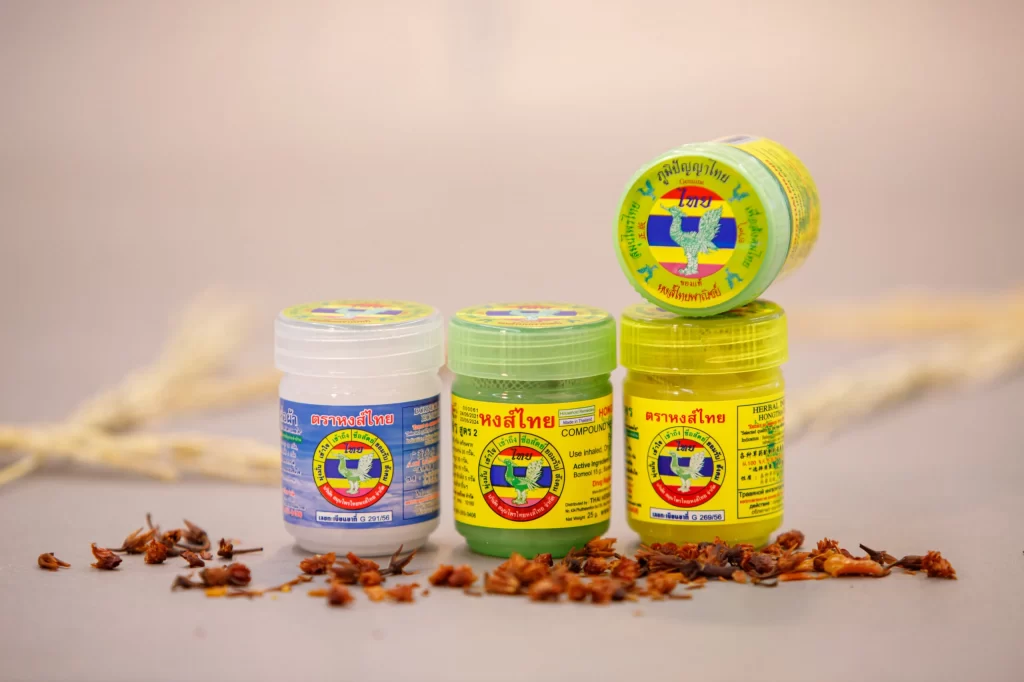
No one expected the success of a Thai inhaler brand that sold like hotcakes to be so tragic, like stumbling and falling, even though it had already reached the finish line. This has caused the overall market, valued at 4.5 billion baht, to become extremely hot. The market trend is looking promising, with a continuous annual growth rate of 10-15%.
When news broke out that the Food and Drug Administration (FDA) announced the results of an inspection of “Hong Thai Brand Herbal Inhaler Formula 2” with registration number G 309/62, it was found that it did not meet the standards set out in the Ministry of Public Health’s announcement on standards for herbal product formulas, B.E. 2564, after several types of microbial contamination were detected.
The FDA clarified that following online media reports in May 2015 about the discovery of fungi in herbal inhalers that could be harmful to the lungs, samples of various brands of herbal inhalers were randomly collected from both sales and manufacturing locations and sent to the Department of Medical Sciences for analysis to test for microbial contamination, yeast, mold, and other pathogens.
By using the criteria for consideration according to the Ministry of Public Health announcement regarding standards, purity values or other characteristics that are important to the quality of herbal products, including:
- The total aerobic microbial count must not exceed 200 colonies/gram.
- The total yeast and mold count (Total Yeast and Mold Count) must not exceed 20 colonies/gram.
- Specific microorganisms, including Staphylococcus Aureus, Pseudomonas Aeruginosa, and Clostridium spp., must not be found.
From the report of the analysis of herbal inhalers collected from the production site by the Department of Medical Sciences, it was found that
Herbal inhaler, Hong Thai brand, formula 2, drug registration number G 309/62, production batch 000332, production date 09/12/2024, expiration date 08/12/2027, found contamination of microorganisms that grow using air, yeast and mold, and Clostridium spp. exceeding the standard criteria specified above. And from the report of the confirmation of the infection, it was found to be the pathogen Clostridium Perfringens.
Chama Herb brand herbal inhaler, registration number G561/67, production batch NF 2522503001, production date 03/03/2025, expiration date 02/03/28, found contamination with aerobic microorganisms exceeding the standard.
The FDA has therefore announced the results of its analysis to the public, stating that both brands of herbal inhalers are considered substandard herbal products. Additional analysis results will be announced in the future if other brands are found to be contaminated with pathogens exceeding the standard.
It may have negative effects on the health of the public, especially those at risk who are physically weak, those with compromised immune systems, or the elderly.
However, FDA Secretary – General Suphattra Boonserm emphasized that the analysis of substandard products is specific to the production lot/batch number that encountered the problem. Other production lots are still being sold and used normally. The public should check the product and if it is a problematic lot, they should immediately stop using it and contact the manufacturer to request a return. However, they should not panic and should exercise caution when purchasing.
From this misfortune, “Teerapong Rabuetham”, founder and owner of Thai Herbs Hong Thai Co. , Ltd., has clarified that the second formula of inhaler that the FDA found to have substandard microorganisms was a lot produced at the end of 2024 and is a formula that uses dried herbs as an ingredient.
The company is currently recalling the aforementioned batches of products for destruction and is prepared to take responsibility if users experience any problems. Everything must be handled based on the facts. and are coordinating with the FDA to inquire for additional details
Initially, we inquired with the FDA, but no clear explanation has been provided. This is because the inspection was conducted randomly after a complaint was filed. We are ready to provide clarification and have been continuously raising production standards. After operating this business for 20 years, this is the first time we have encountered this issue.
“I admit that the widespread news, which has yet to be fully clarified, and people still don’t fully understand, could have an impact on short-term sales. I can confirm that this only affected the second batch of formulas. If there are any issues, we are ready to address them.”.
It is estimated that around 200,000 bottles of the problematic inhaler are being recalled.
But the worst karma came to an end when the location used for applying stickers and packing them in jars in the Phutthamonthon Sai 3 area was identified as an illegal factory. Thiraphong explained that the problem stemmed from production problems due to the large number of orders. He needed to find space and purchase additional sticker-applying machines to solve the immediate problem of investing in building a new factory, but faced with the problem of obtaining a permit.
The company invested in building a new factory in the Phutthamonthon Sai 4 area, following a design approved by the FDA. However, before receiving a permit, the company had to submit a request to the Samut Sakhon Provincial Public Health Office. When contacted, they were told that if additional machinery were to be imported, it would have to wait until it was ready. This has resulted in the FDA’s request for a permit not yet being completed.
Thiraphong said he felt disheartened, saying the situation had escalated to the point where it had caused incalculable damage. His honest and dedicated business for 20 years had been destroyed in just two days.
According to the data, Formula 2 of Hong Thai inhaler is the best-selling, with 600,000 jars produced per month.
Thiraphong recently issued a statement stating that he is fully responsible for the incident and expresses his deepest condolences to his customers and business partners. As executives, he accepts the criticism. He is determined to address the issue seriously within seven days. He requests an opportunity to improve by raising standards significantly. He is collaborating with the National Institute of Nuclear Technology (Public Organization) (NINT) to use “sterilization radiation” technology to create 100% safe Thai herbal products, meeting world-class standards.
Read more at: https://www.prachachat.net/d-life/news-1912367