

 ไทย
ไทย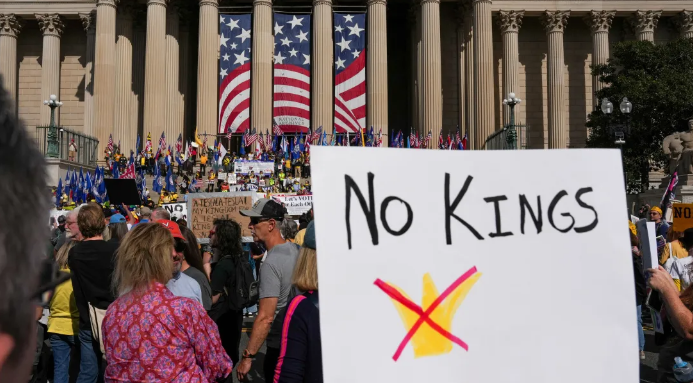
Today (March 29, 2026), CNN reported that protests under the banner of “No Kings” took place simultaneously across the United States, with large numbers of people gathering in major cities, suburbs, and smaller communities to express their opposition to President Donald Trump’s policies. The protests spanned from the east to the west coast of the country, particularly in California, including cities like San Francisco and Los Angeles, which saw large numbers of participants, as well as events in Minnesota, which served as a major hub for the movement.
In Minnesota, the city of St. Paul hosted a large event attended by politicians and public figures, including Bernie Sanders, the senior Senator from Vermont, and Ilhan Omar, an American politician of Somali descent known as one of the first Muslim women elected to the U.S. Congress and the first woman to wear a hijab in Congressional history. They delivered speeches criticizing government policies, including immigration law enforcement and the ongoing conflict with Iran.
Meanwhile, legendary musician Bruce Springsteen performed at the event, creating an atmosphere of social unity through both music and symbolic expression. In many parts of the country, demonstrators gathered peacefully, singing, dancing, and holding signs with messages such as “No War” and “No Kings” to reflect their dissatisfaction with the tight economic conditions, high oil prices, and the effects of war.
In New York City, protesters marched through Manhattan, chanting slogans against immigration policies and war. Large numbers of demonstrators also joined the protests in Chicago and Portland, some dressed in costumes or using political symbols to convey their messages. While most demonstrations were peaceful, in some areas, such as West Palm Beach, Florida, there were verbal confrontations between Trump supporters and protesters. However, police were able to control the situation. Interestingly, these protests are not limited to states that tend to support the Democratic Party, but have also spread to states that are Republican strongholds, such as Texas, Florida, and Ohio, where numerous events have been held. Furthermore, smaller communities and rural areas are beginning to join the movement more, for example in Alaska and Montana, demonstrating that the “No Kings” movement has gained wider traction compared to last year.
Internationally, protests also took place in several European countries, such as Spain, France, and Germany, with participants expressing concerns about the role of the United States on the world stage and the impact of its foreign policy. US government representatives responded to the protests, stating that they did not reflect the opinions of the majority of the public. President Trump has yet to comment on the protests, but he has previously said that this type of protest is “ineffective.”
However, the organizers insisted that the “No Kings” movement was an expression of people’s power seeking to protect democracy and demanding transparency, accountability, and governance that responds to the needs of the people. “No Kings” is the name of a political protest movement in the United States, used as a symbol to oppose centralized power or leaders who are above the law, particularly in criticism of President Donald Trump’s administration. Protesters use the phrase “No Kings” to convey that the United States is a democracy, not a monarchy or dictatorship, and that ultimate power should belong to the people. This movement began with the mobilization of civil society groups, activists, and progressive political networks, focusing on key issues such as opposition to strict immigration policies, concerns about abuse of power by the state, economic problems, and foreign policy concerns like war with Iran. Protests are often held simultaneously in multiple cities across the country and are mostly peaceful.
Overall, “No Kings” wasn’t just a single rally, but a movement reflecting discontent among some segments of the population with the direction of the country and concerns about the future of democracy in the United States. Supporters viewed it as a defense of rights and freedoms, while opponents saw it as a political movement against the leader. This protest marks the third round of similar events, following previous gatherings with millions of participants. While the political context has changed, key issues such as concerns about state power, the use of force, and economic problems remain crucial drivers of the movement.
Read more at: https://www.thaipbs.or.th/news/content/503958