

 ไทย
ไทย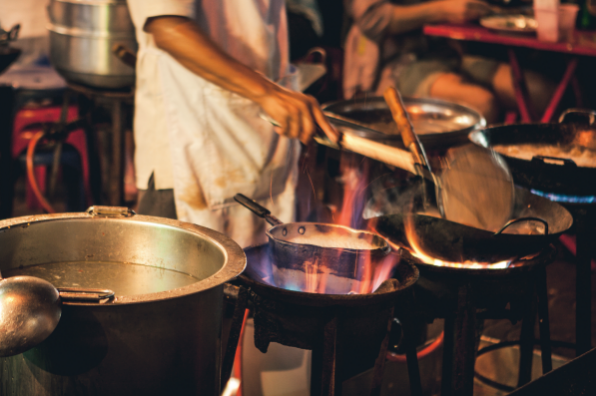
KResearch forecasts the food and beverage market to grow by 3.9% in 2026, reaching a value of 682 billion baht. However, growth will be uneven due to fragile purchasing power, high competition, and high costs. Street food vendors are expected to show strong growth at 5.8%, while beverage businesses are projected to grow by 5.1%. Businesses must focus on “value for money and unique selling points” to cope with the slowing market. Kasikorn Research Center forecasts that the food and beverage market value will grow by 3.9% in 2026, but this growth will be uneven due to fragile purchasing power, increased competition, and rising costs, which are putting pressure on profits for businesses across all sectors.
The restaurant business sector is expected to grow by 3.8%, led by street food vendors, which are experiencing higher-than-average growth as a result of the Thai Help Thai Plus project. The beverage business sector (including bakeries and ice cream) is expected to expand by 5.1%. The food and beverage industry must quickly adapt to the market slowdown after the expiration of government measures by highlighting “value for money” or creating a clear “unique identity” to maintain competitiveness and attract consumers.
In 2026, the food and beverage business faces continued challenges, with a market value of 682 billion baht, growing by 3.9% from the previous year (revised upward from the previous forecast of 2.5%), but at a continuously slowing rate.
The Factors Driving this Growth Stem from Three Points.
The short-term boost from the “Thai Helps Thai Plus” project
is being passed on to small businesses, such as street food vendors. The project, spanning from June to September 2026, is expected to inject at least 10 billion baht into the food and beverage business. Data from the Fiscal Policy Office indicates that the majority of spending is on goods and services from participating restaurants, government-subsidized shops, and food delivery platforms. The price of food and beverages has increased due to rising business costs, with prices rising by approximately 10-15% compared to before the conflict in the Middle East. At the same time, newly opened restaurants and beverage outlets have also increased their prices. Marketing strategies that stimulate consumer spending per transaction , particularly through the opening of new stores and the expansion of existing branches, have contributed to increased spending in the food and beverage sector.
Competition is fierce
with the number of new restaurant and beverage establishments opening and closing at an accelerating rate. By 2026, it is estimated that there will be over 700,000 restaurant and beverage establishments nationwide (excluding street vendors and food trucks). In the first eight months of the year, 3,263 new businesses were registered, a 20% increase, ranking among the top five businesses with the highest number of new openings. Meanwhile, business deregistrations increased to 491, or 11%, reflecting the easy entry and exit points and intense competition in the restaurant and beverage business. In addition to competing in the food and beverage business, businesses must also compete with ready-to-eat meals and beverages, and coffee shop services within convenience stores, which are another option for certain consumer groups.
While revenue and branch expansion have increased, net profit has decreased.
Under intense competition and limitations on price increases, coupled with persistently high costs, businesses are forced to rely on promotional strategies and branch expansion. These factors are significantly pressuring profit margins, with even major players showing signs of declining net profits in the first half of the year.
The restaurant industry is nearing 600 billion baht.
Kasikorn Research Center states that in 2026, the restaurant market (including full-service restaurants, limited-service restaurants, and street food stalls with storefronts) is expected to have a total value of approximately 590 billion baht, growing by 3.8% from the previous year. The growth of each type of restaurant is driven by different specific factors, such as location, competition density, price, food quality, service, adaptation to consumer trends, and the introduction of unique menus.
Street food vendors with physical storefronts are experiencing higher-than-average growth, projected to reach a 5.8% year-on-year increase by 2026, or a value of 280 billion baht. Their easy accessibility and value for money align with the current consumer trend of cautious spending. Furthermore, some of these vendors have been operating for a long time and possess unique characteristics, allowing them to maintain their popularity and loyal customer base.
However, street food vendors face challenges from high raw material costs (potentially as much as 40-50% of total costs), energy costs, and persistently high hidden expenses. Raising prices is relatively difficult due to high customer price sensitivity, forcing vendors to manage costs efficiently and maintain quality. Furthermore, the continuous influx of new vendors in this type of food business intensifies competition.
Limited Service Restaurants (LSRs) are experiencing revenue growth driven by branch expansion, with an expected year-on-year increase to 94 billion baht. This growth is supported by a lifestyle focused on convenience and affordability, the opening of new branches by major operators such as fried chicken and pizza chains, the conversion of full-service restaurants to LSRs to reduce operating costs, and the expansion of franchised restaurants by smaller operators.
However, major players in the fried chicken, pizza, and burger industries face increased competition from the rapidly growing number of similar restaurants, both casual dining establishments and smaller-scale ghost kitchens that focus on delivery services without a physical storefront. These ghost kitchens also offer similar price points, menu variety, and unique culinary characteristics.
Full-service restaurants have been affected by decreased purchasing power or consumption frequency, but are expected to grow by 1.8% year-on-year, or have a value of 214 billion baht.
Buffet restaurants remain popular with consumers due to their value for money, but the challenges lie in low profit margins and intense competition, leading to volatile revenue.
The fine dining restaurant sector’s success depends on the purchasing power of its target customer group. Mainstream casual dining, targeting the middle class and mass market, presents more challenges compared to ultra-fine dining or high-end restaurants whose primary customer base is affluent individuals.
Beverage shops accounted for 9.4 million baht, a 5.1% increase.
The beverage market including bakeries and ice cream shops is expected to have a total value of 94 billion baht in 2026, growing by 5.1% from the previous year, resulting in the beverage market share increasing to 14% of the total food and beverage business. The coffee and beverage market, valued at 64.4 billion baht, grew by 6.0% year-on-year, driven by increased beverage consumption among Thais and the opening of more premium beverage stores, which also impacted traffic and sales of other retail outlets. The bakery (including ice cream) market, valued at 29 billion baht, grew by 2.9% year-on-year. This growth was driven by increased consumer popularity of baked goods, as well as a wider variety of bakery items and more imported brands entering the market. However, the increased number of operators has led to high competition in this market.
Looking ahead to the 1970s, the challenges remain.
Kasikorn Research Center estimates that the food and beverage business will continue to face challenges by 2027. The issues affecting business revenue include Consumer purchasing power has not yet fully recovered, impacting spending and restaurant visit frequency, especially after the end of government incentives in the fourth quarter of this year. Some businesses may face uncertain sales. The restaurant industry is highly competitive, with new restaurants opening continuously and a wider variety of food and beverage options offering consumers more choices. Established restaurant owners need to constantly adapt and find new things to retain their customer base and maintain their competitiveness. Business costs are continuously rising, including raw material costs, especially imported ones, utilities, rent, labor wages, and fees for using food delivery platforms. Besides managing costs, businesses must avoid price competition and instead focus on quality, taste, and reasonable portion sizes to attract customers.
Consumer behavior is complex and rapidly changing, driven by four main trends: the polarization of purchasing power (high-income consumers willing to pay more for experiences and stories versus those prioritizing value and quantity), the demand for multi-sensory experiences, declining brand loyalty, and fast-paced lifestyles (grab & go/solo dining). These trends pose challenges for food and beverage businesses, requiring them to adapt their strategies and clearly highlight their unique selling points, such as “value for money” and “unique identity.”
Read more at: https://www.prachachat.net/business/news-2066382