

 ไทย
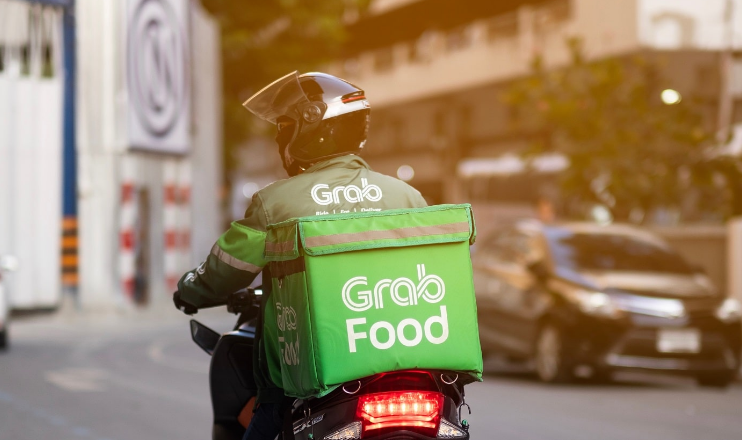
One of the most popular ride-hailing and food delivery apps, Grab is usually downloaded onto most users’ smartphones. Currently, in Thailand, Grab holds the largest market share in food delivery, according to Momentum Work. Overall, Grab’s services, covering eight Southeast Asian countries – Thailand, Singapore, Malaysia, Indonesia, Vietnam, the Philippines, Myanmar, and Cambodia – have delivered over 20 billion rides, both for people and food, since its launch in Malaysia in 2012.
In 2025, Grab achieved profitability for the first time in consecutive quarters. Besides its core transportation and delivery business, its Financial Services segment also showed significant growth. Grab positions itself as an organization prioritizing innovation, and its strategy focuses on achieving continuous profitability. In this AI era, it’s inevitable that it will strategically enter the AI field. Thairath Money reporters attended “GrabX 2026,” held in Jakarta, Indonesia on April 8th. Grab unveiled numerous new products, this year’s concept being “Your Everyday Guide,” aiming to be more than just a transportation service provider and a super app, but a “trusted partner” in every step of life. This provides a glimpse into Grab’s future direction, especially in an era where AI plays a significant role in almost every aspect of life.
From a taxi-hailing app in Malaysia.
Grab’s origins stem from two Harvard classmates who aspired to return and develop their homeland, Southeast Asia. Anthony Tan and Tan Hooi Ling met in a business class where they were learning about Business at the Base of the Pyramid (BBOP), or building a business that can generate profit while also benefiting society. This led them to develop an idea to find a solution to a problem in their hometown. At that time, one of the major problems was the safety of women, children, and the elderly when taking taxis. In 2012, Anthony Tan and Tan Hooi Ling developed a solution to this problem and co-founded a startup called “MyTeksi” to make calling taxis easier and safer. They received initial funding of $25,000 from winning a presentation at a university.
Grab’s growth has been rapid. In 2013, it rebranded itself as “GrabTaxi,” aiming to provide a service similar to Uber in the United States. It then immediately expanded into Singapore, the Philippines, and Thailand, adapting itself to the lifestyles of people in each country, eventually becoming a popular taxi-hailing service. Later in 2014, this growing startup (in terms of users) rebranded as “Grab” with a new strategy to offer more than just taxi services. It subsequently expanded to include GrabBike and GrabCar to compete directly with Uber in the Southeast Asian market. These services have propelled Grab to become one of the leading companies in ASEAN.
Towards becoming the super app of Southeast Asia.
Not long after, almost every year, Grab has launched new products to serve its customers, including GrabExpress (2016) delivery service, GrabPay (2016) digital wallet service, before establishing a subsidiary, Grab Financial Group, to provide financial services, and finally launching GrabMart (2019) for purchasing goods from stores and supermarkets. Grab’s major breakthrough came in 2018, when its superior local reach compared to major Western providers led it to acquire Uber Southeast Asia, which at the time lacked a thorough understanding of the market. This acquisition further solidified Grab’s position as a dominant player in Southeast Asia. Later, Grab officially launched GrabFood, a food delivery service similar to Uber Eats, which integrated Uber’s services with Grab’s. This change led to a shift in Grab’s business direction, transforming itself into a “Superapp” by consolidating all its services into a single app.
Then, in 2021, Grab went public on the Nasdaq, becoming the first and largest SPAC (Special Public Company Limited) listing in the US market. This boosted Grab’s valuation to over $40 billion, raising over $4.5 billion. However, the following year, its stock price plummeted after disappointing performance and the company’s inability to turn a profit. Grab’s business expansion clearly demonstrates its attempt to create new business opportunities to encompass the entire Grab ecosystem. One such area is finance, which in 2022 launched GrabFin, a financial service that goes beyond an in-app payment wallet, offering insurance, loans, and investment products.
The year 2026 will be “Your Everyday Guide”.
Jumping ahead to 2026, Grab has been diligently releasing new features to keep users engaged with the app. This year, Thairath Money attended “GrabX 2026,” an event launching new innovations. Naturally, this year’s focus is on AI, along with a restructuring of the company to elevate the super app to the next level. Leveraging the vast amount of data Grab possesses, the goal is to become “Your (Intelligent) Everyday Guide,” a trusted (and highly intelligent) companion that assists users at every step of their lives.
“Grab adheres to the principle of AI-First, with Heart, which means using the most sophisticated technology to solve real problems for ordinary people, so that no one is left behind in the AI era,” said Anthony Tan, CEO of Grab Group, on stage. Since 2025, Grab has shifted its focus to AI, launching Mine, an AI assistant for merchants, and this year introducing Coach, an AI assistant for drivers. “This is like a trusted partner that helps increase revenue and manages tasks, allowing drivers to focus on the road,” Tan continued. Behind the scenes of this development, Anthony Tan calls it the “Grab Intelligence Layer,” an intelligent infrastructure layer that runs behind the scenes, handling all features including security, finances, and performance management. Grab bears the cost of all AI Tokens, allowing partners to use them for free, “because AI shouldn’t be a luxury only for those who can afford it.”
“Instead of letting the gap between tech experts and the underprivileged widen, we choose to use our intelligent infrastructure to connect them,” Tan said, reflecting Grab’s initial vision of building a business and helping society simultaneously. Philipp Kendal, Chief Product Officer of GrabX, who spoke on stage, unveiled new AI-powered features and products from Grab. These key features leverage Grab’s data to develop innovative solutions that comprehensively address the needs of consumers, riders, drivers, and merchants. This year, Grab is dividing its product offerings into three main groups to meet the needs of people at every stage of life: catering to modern lifestyles (For Local Life), supporting tourism (For Effortless Travel), and supporting businesses (For Business Empowerment). Many features build upon existing offerings, while others are entirely new, reflecting Grab’s business direction and paving the way for new possibilities.
For Local Life:
- Group Ride: This ride-hailing service helps save fares and energy for passengers who want to travel together. This feature allows for multiple pick-up and drop-off points, and fares are calculated based on the actual distance and time spent by each passenger on the trip.
- Grab More: A feature that allows you to order food from multiple nearby restaurants in a single order and have it delivered together without paying extra fees or delivery charges.
- Grab AI Assistant and Grab Shopping Agent: Personal AI assistants that can provide information and recommendations beyond just ordering food. For example, they can suggest menu items based on your previous order history, and provide catering recommendations. The system will analyze the information and automatically place the order. Similarly, on the shopping side, the AI can analyze images, descriptions, or voice prompts and recommend products from multiple stores, along with suggesting similar items.
- GrabMaps for Consumers: A navigation map service for individuals, featuring a Journey Planner that designs and predicts arrival times based on past usage data, suggesting optimal departure times and transportation options, and allowing for immediate ride booking. It also includes Indoor Navigation, providing detailed indoor mapping using driver usage data, and Custom Voice, enabling users to record and use their own or another person’s voice for navigation.
- Cash Loan: A loan service for individuals, selected based on app usage data. In Thailand, the maximum loan amount is 20,000 baht, intended for business purposes. Grab plans to expand this service to several countries across Southeast Asia, providing funds for medical expenses, personal repairs, and tuition fees.
For Effortless Travel:
- Personalized Travel: Grab is enhanced with features to become an even better travel assistant for longer distances. It integrates information and notifications from the moment travelers leave home, arrive at the airport, and reach their destination. Users can request a ride, view airport maps, check-in points, and navigate the entire process in one place. Additional features include checklists such as reminders for purchasing a SIM card, among others.
- GrabStays: Book hotels directly through the Grab app. Grab, in partnership with its users, allows travelers to book affordable accommodations, ideal for last-minute bookings, and pay instantly via GrabPay.
- GrabPay for Travel: Enhancing payment services, GrabPay users can now pay instantly at participating merchants anywhere in Southeast Asia via QR code.
For Business Empowerment:
- Virtual Store Manager: A new product for restaurants and businesses that transforms CCTV cameras into a smart store management assistant. It monitors employee performance, maintains hygiene standards, and sends instant alerts to the owner in case of any problems.
- Cloud Printer: A hardware product from Grab that prints order slips directly to the kitchen, reducing the workload for front-of-house staff. When food is ready in the kitchen, the system automatically notifies riders to pick up their orders, helping to keep food fresh until it reaches the customer.
- Tap to Pay: Another service integrated with finance, allowing merchants to accept debit and credit card payments directly using their smartphones. Customers can simply tap their card to pay instantly, without the need for additional equipment installation or costs.
- Driver AI Assistant: An intelligent partner and assistant for drivers, leveraging data collected by Grab to make drivers’ journeys more convenient and faster. It can ask questions and perform certain tasks, such as answering customer inquiries on their behalf.
Simultaneously, Grab has upgraded its services from the digital world to the physical world with the launch of the Carri robot, which aims to be used similarly to how Amazon is using it in the final stages of delivery. Carri is being used to meet the needs of both restaurants and delivery riders. Typically, drivers lose around 10% of their income due to wasted time walking to shops or restaurants and waiting in long queues. Carri addresses this problem by picking up food from shops and delivering it to riders at designated locations, who then deliver it directly to customers. Furthermore, in the future, Carri may be used for last-mile deliveries, handling the final step from the delivery vehicle to the customer’s doorstep, enhancing rider safety and reducing energy costs.
Read more at: https://www.thairath.co.th/money/business_marketing/business_strategy/2926164