

 ไทย
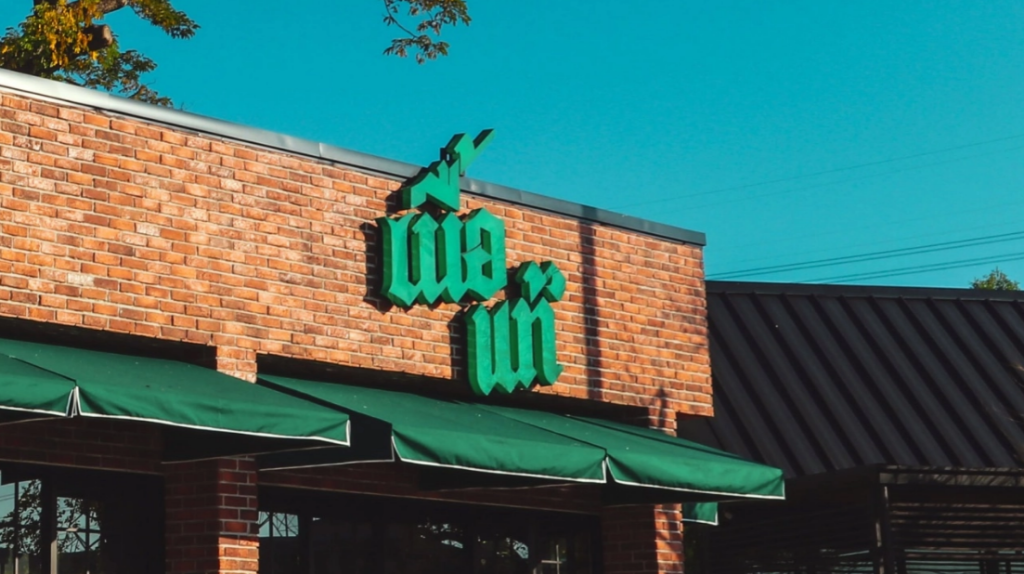
“Neua Tae” (True Meat) is a beef brand born from the passion of Bang To – Veerachon Sratthaying, a former singer who loves beef and dreamed of introducing high-quality beef to Thai people. More than a decade later, “Neua Tae” has expanded from a restaurant to selling ready-to-eat menus and becoming an importer of Australian Angus beef. However, in recent days, the name “Nuea Tae” (meaning “true essence”) has been widely discussed due to cash flow problems resulting in delayed payroll payments. Later, the brand’s executives admitted to the media that the main cause was an error in cost calculation and recording, becoming a major cost crunch that negatively impacted their financial performance.
Revealing the “true” income figures for the past 5 years.
Data from the Department of Business Development indicates the financial performance of Company B Limited from 2020 to 2024. In terms of revenue, it grew from 203,048,187 baht in 2020 to 634,845,667 baht in 2024.
- While the net profit/loss in 2020 was a loss of 11,207,924 baht, it increased to 62,221,058 baht in 2021,
- before turning profitable from 2,360,776 baht in 2022 onwards, increasing to 16,182,441 baht in 2024.
Why “cash flow” can shake up restaurants more than you think?
Following the cash flow problems experienced by “Neua Tae” and “Company B,” many may wonder why cash flow is so important and vulnerable, and why such issues can significantly impact restaurants. In the restaurant business, the main problems faced are “highly volatile” raw material costs, “short shelf life” of fresh ingredients, and many suppliers may be facing similar crises and therefore demanding cash in advance. The next issue is potentially inconsistent revenue, as restaurant sales depend on many factors, including seasonality, weather, economic conditions, and consumer activities, all of which can cause sales to fluctuate.
Furthermore, the issue of price wars has forced many restaurants to jump into this market, resulting in lower profit per dish while rent and labor costs remain the same. When food costs are not well controlled, cash flows out faster than anticipated. In the case of “Nuea Tae,” a restaurant facing cash flow problems that affected employee salary payments despite continued revenue growth, it reflects that “cash flow” may be just as important as sales or profit, and is one of the key challenges that restaurant owners must manage in a high-cost and highly competitive environment.
Looking ahead, what will the “restaurant business” be like?
The restaurant business is one of the sectors that faces challenges from a large number of market players, cost factors, and economic conditions that affect consumer spending. Data from Krungsri Research indicates that from 2026 to 2028, the total revenue of Thailand’s food and beverage business is projected to grow at an average rate of 2.9-3.9% per year. However, growth is expected to remain low in 2026 due to economic slowdown amidst geopolitical tensions, particularly the conflict in the Middle East, which has driven up oil prices, undermined consumer confidence, and slowed the recovery of the international tourist market due to increased travel costs.
However, in 2027-2028, revenue for this business is expected to improve, benefiting from a rebound in recreational activities as the economy and tourism sector gradually recover. The role of social media in helping businesses reach consumers through storytelling will also contribute to increased demand for out-of-home consumption. On the supply side, the number of businesses continues to increase, driven by the growing use of food delivery applications and the expansion of shopping malls and modern retail stores. These factors broaden distribution channels and customer bases for the food and beverage industry. However, this is accompanied by increased price competition, particularly from high-end restaurants employing price reduction strategies, while costs are expected to remain high, especially energy costs, amidst recurring geopolitical tensions.
Kasikorn Research Center analyzed that the food and beverage business in 2026 will face business challenges, primarily due to the situation in the Middle East. These challenges include accelerating business costs, which will pressure net profits to decrease. Rising energy prices have driven up the cost of raw materials such as rice, fresh food, vegetables, and fruits, as well as packaging. As a result, food and beverage businesses are gradually increasing prices by an average of 10%-20% compared to before the events in the Middle East. While revenue for the food and beverage business is projected to decline due to weakened domestic purchasing power, which was already fragile, coupled with an expected decrease in the number of foreign tourists visiting Thailand compared to last year.
Kasikorn Research Center estimates that the food and beverage market value will grow by only 2.5% in 2026, a slowdown from the 4.5% growth last year, with the growth primarily driven by price factors. Therefore, businesses must prepare to cope with this, whether it’s managing food and packaging raw material costs (e.g., stocking raw materials appropriately, looking for alternative raw materials and sources, etc.), minimizing food waste, avoiding price competition, focusing on quality and value for money, and adapting to rapidly changing consumer trends. The food and beverage sector has been impacted differently depending on its type and customer base. We identify the most vulnerable groups amidst high costs as follows:
- Buffet restaurants face intense competition, coupled with rapidly rising raw material and energy costs.
- Premium stores are facing challenges due to reduced consumer usage frequency and rising costs of imported raw materials.
- Restaurants that rely heavily on delivery revenue primarily face low average profit margins, escalating costs, high gross profit margins (GP), and risks related to pricing and packaging supply.
Kasikorn Research Center further commented that the situation in the Middle East remains uncertain, making it difficult to predict the timing of its conclusion. Furthermore, even though the Channel of Hormuz has reopened, it will still take time for energy and raw material supplies to return to normal. Therefore, businesses must prepare to cope with this, whether it’s managing food and packaging raw material costs (e.g., stocking raw materials appropriately, looking for alternative raw materials and sources, etc.), minimizing food waste, avoiding price competition, focusing on quality and value for money, and adapting to rapidly changing consumer trends.
Read more at: https://www.prachachat.net/business/news-2035611